
Quick Summary
A studio audition is shorter and less intimidating than most voice actors expect, because the session is built around the material, the booth, and an engineer who directs. Talent starts with a brief consultation, records several takes in an acoustically treated booth with direction on pacing and delivery, and leaves with edited files in formats that agencies and casting platforms accept. A treated booth removes the room noise that undermines home recordings, and a single visit usually covers a reel. Black Label Multimedia runs free voice talent auditions in Hampton, and a phone call is the quickest way to get on the schedule.
Actors who have never auditioned in a studio often wonder whether a panel of people will be staring at them through the glass, and the picture is far less formal than that. When people search for voice-over recording services in Hampton Roads they are usually trying to picture the room, the length of the session, and what they ought to have in hand when they walk in.
We hold free voice talent auditions at our Hampton studio, and clients who are casting a project choose from our talent list, so we spend a good part of each week on both sides of that process. What follows is how a session actually runs here, along with the preparation that makes it go well, and for the schedule of a specific audition we would ask you to call 757-825-2441 because those details move with the projects we are casting.
Who Auditions Here and Why It Is Free
Our auditions connect two groups. Companies, agencies, and producers that need a voice for a commercial, a narration, or a character can choose from our extensive list of talent for a recording project, and actors who want to be on that list can send demos and a note of interest through our contact page.
Since there is no fee to audition, what you invest is your time and preparation, which is why we encourage actors to treat the first session as seriously as a paid job. The recording you leave with is frequently the first thing a client or agency hears from you, and it tends to shape their impression more than any résumé line.
Starting With Your Goals and Your Material
We open each talent session by talking about where you are in your career and what kind of work you want, because an actor chasing commercial copy needs different material from one aiming at audiobooks or animated characters. You can bring scripts you have been practicing, and when the pieces do not show enough range we suggest others that stretch the voice in a direction you had not tried.
A note on pronunciation helps more than people expect. If a script has an unfamiliar surname, a brand term, or a place name, writing out how it should sound before you arrive keeps you from stopping mid-take and breaking the rhythm of a good read.
Recording in the Booth
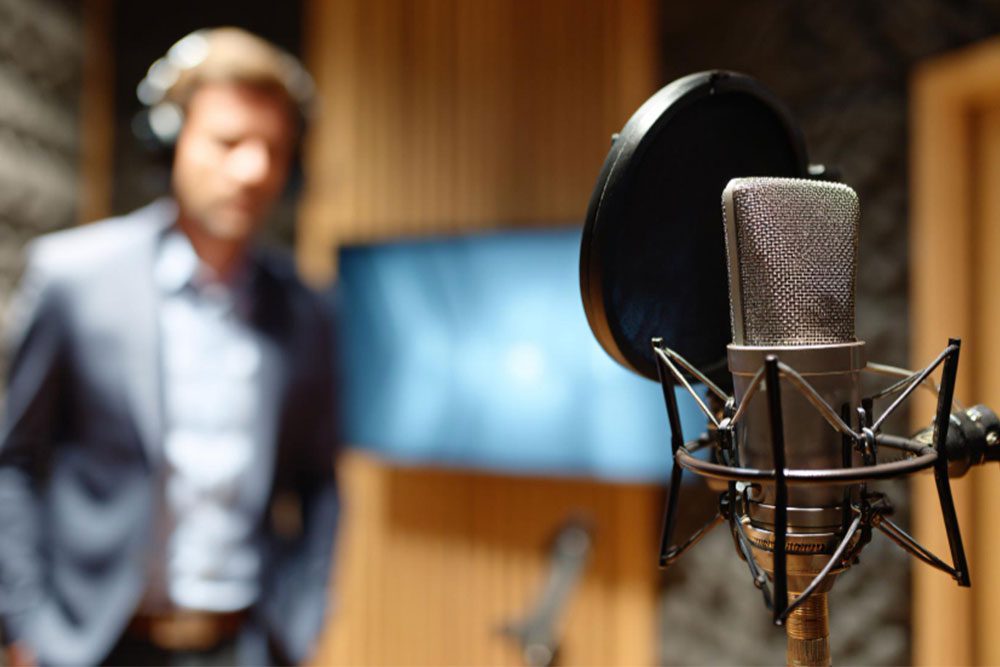
The booth is acoustically treated, so the room contributes nothing to what the microphone hears. Before the real takes begin we run a short voice check and set levels, adjusting microphone distance and monitoring until your voice sits cleanly, and from that point the engineer is listening to tone, pacing, volume, and any background noise while you read several takes of each piece.
The part that surprises first-timers most is the direction. We tell you when a line is running fast or when the emphasis lands on the wrong word, and a client sitting in can ask for a warmer opening or a slower finish, so that a read which sounded flat when practiced alone often comes alive with a second set of ears giving feedback. Pickups for a missed word or a stumbled last line happen in the same session, which spares you a second booking for a small fix.
Editing and Delivery
Once the takes are recorded we choose the strongest ones, edit them for pacing and delivery, and assemble a reel or sample set if that is the goal of the visit. Actors who work in several styles can have separate reels for commercial, narrative, and character work, which suits the way agencies and casting directors tend to browse.
Final files are exported in the formats that agencies and casting platforms expect and are named so that they can be submitted without further cleanup. Most reel sessions fit into a single visit, with the length depending on how much material you bring.
What a Home Setup Cannot Give You
People ask us fairly often whether they could record the audition at home and skip the drive, and the honest answer is that a home recording usually carries something the actor has stopped hearing, such as the hum of an air handler, the slight echo of a bare wall, or traffic outside a window. A casting listener hears that within seconds, and a strong performance can sound amateur because of it. Our booth removes that noise, so the first thing a client hears is the performance.
There is also the matter of having a trained engineer handle microphone placement, levels, and playback while you concentrate on acting, since the two jobs pull attention in opposite directions when one person is trying to do both. A flawed first sample can cost an actor opportunities that never announce themselves, and a single visit with us is a modest way to avoid that.
Getting on the Schedule
To set up your session, call 757-825-2441, use our contact page, or reserve a time on our booking page, and tell us whether you are auditioning for a project, hoping to join our talent list, or building a demo so we can plan the session around that.
Actors who want to learn more about demos and reels can read about our voice-over talent recording sessions, and businesses that need a voice for a commercial, an e-book, or a training program can see how our voice over recording services run from intake to final files. Call us and we will find a time that works.
FAQs
Yes, we run free voice talent auditions at the studio in Hampton. Clients who are casting a recording project choose from our extensive talent list, and an actor who wants to be added can send demos along with a note of interest through our contact page. Because the projects we are casting change, a quick call to 757-825-2441 is the best way to confirm the current schedule.
Scripts you have already practiced are welcome, and it helps to write out the pronunciation of any unusual names or terms before you arrive. When you are unsure that the pieces show your range, tell us what kind of work you want, and our engineers will suggest others to add. Arriving rested, with a clear idea of the role you are chasing, matters more than any piece of equipment.
Session length varies with the amount of material, but most reel sessions fit in a single visit. A short audition read is quicker than assembling a full demo, because a demo involves choosing several pieces, recording multiple takes, and editing for pacing. We will give you a realistic time estimate when you book so you can plan your day.
You can, but home recordings often carry room noise that makes a good read sound unpolished, and you lose the direction an engineer provides. In our treated booth, we manage microphone placement, levels, and playback while you perform, and we deliver edited files in formats agencies and casting platforms accept. That combination usually leaves a stronger first impression.